Diabetes remains the leading cause of kidney failure worldwide despite better glucose and blood pressure control and decades of RAAS blockade. Cardiovascular complications of diabetes have fallen by more than 60 percent in two decades; the incidence of diabetic kidney disease has fallen only modestly, and the annual mortality of people with diabetes on dialysis is still 15 to 20 percent, higher than that of many cancers. TRIDENT exists because four questions are still open.
About half of people with type 2 diabetes develop chronic kidney disease, and one in five reaches an eGFR below 60. A minority of rapid progressors, losing more than 5 mL/min per year, account for most kidney failure and most clinical trial endpoints, yet the mechanisms that separate them from slow progressors are poorly understood. TRIDENT follows every participant from the biopsy to define the molecular fingerprint of rapid decline.
Genetic studies of diabetic kidney disease have found few reproducible associations, and animal models do not reproduce progressive human disease. TRIDENT combines whole-exome sequencing and genome-wide genotypes with the tissue transcriptome, epigenome and spatial maps of the same kidneys, so that risk variants can be mapped to the cells and neighborhoods in which they act.
Candidate markers such as KIM-1, TNFR1 and TNFR2 have promise but have never been validated against molecular signatures of the kidney itself. TRIDENT pairs biopsy-time plasma and urine with the tissue, which is the only way to learn which blood and urine measurements report the biology that matters.
Diabetic kidney disease is a clinical label, often given without a biopsy, and many patients lose kidney function without ever developing albuminuria. Since 2025 TRIDENT enrolls participants with non-diabetic kidney disease as comparators, toward 1,000 participants in all, so that what is specific to diabetes can be told apart from what is common to all failing kidneys.
The classical picture is glomerular: a thickened glomerular basement membrane, mesangial expansion and nodular sclerosis, with albuminuria as the clinical shadow of the damaged filter. TRIDENT tissue shows that the course of the disease is decided elsewhere as well.
In TRIDENT biopsies, interstitial fibrosis tracks how much function has already been lost, but the rate of decline tracks glomerular lesions, and the class with visceral epithelial hyperplasia progresses fastest. Podocyte injury and maladaptive glomerular epithelial hypertrophy are drivers, not bystanders.
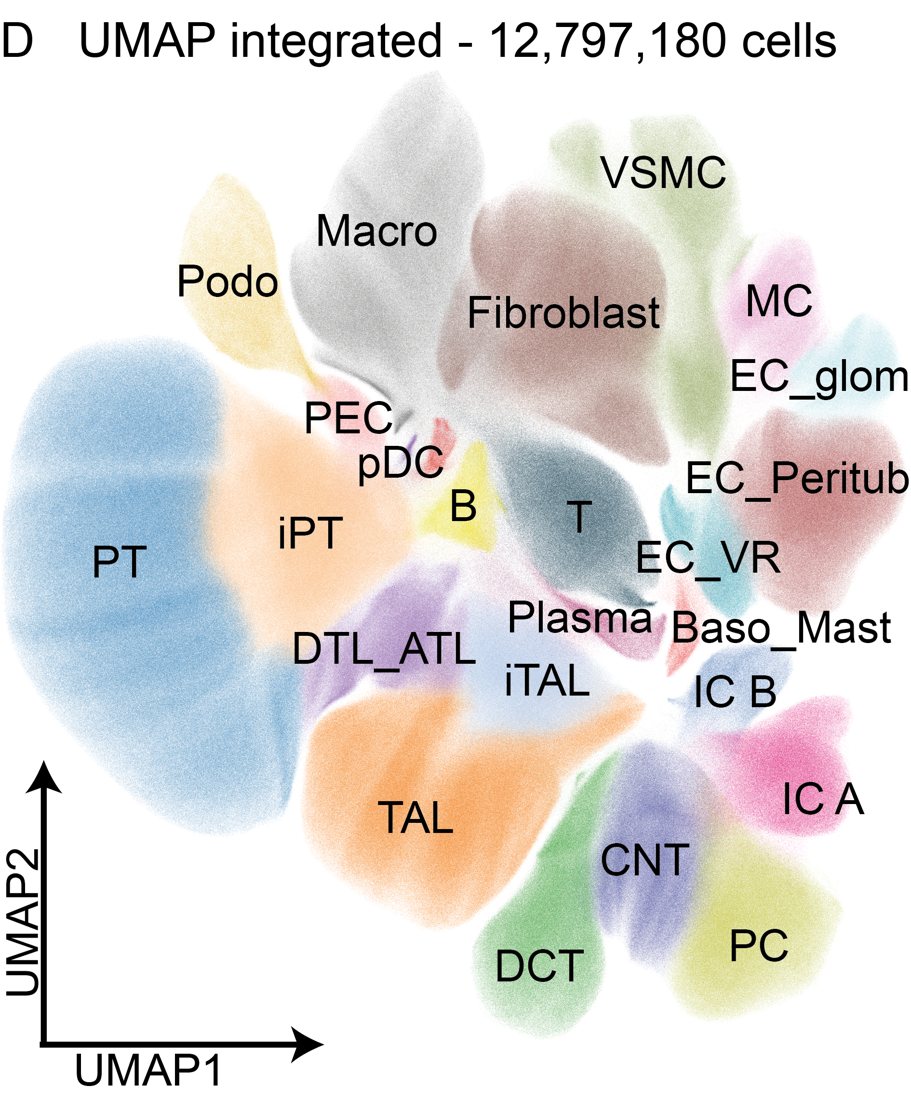
Single-cell and spatial profiling place a failed-repair, injured proximal tubule state at the center of a fibrotic microenvironment of fibroblasts, immune cells and remodeled vessels. As eGFR falls, injured tubule and immune cell fractions rise and healthy proximal tubule falls, in a continuous and quantifiable way.
Spatial transcriptomics resolved B cell-rich, tertiary lymphoid-like niches in about 8 percent of TRIDENT participants, the B cell-rich subgroup, which progresses to kidney failure at a markedly accelerated rate and is invisible to conventional pathology.
Tubular cells are among the most mitochondria-rich in the body. Lipid metabolism, NAD+ and mitochondrial inflammation link kidney injury to the cardiovascular-kidney-metabolic syndrome in which most TRIDENT participants live.
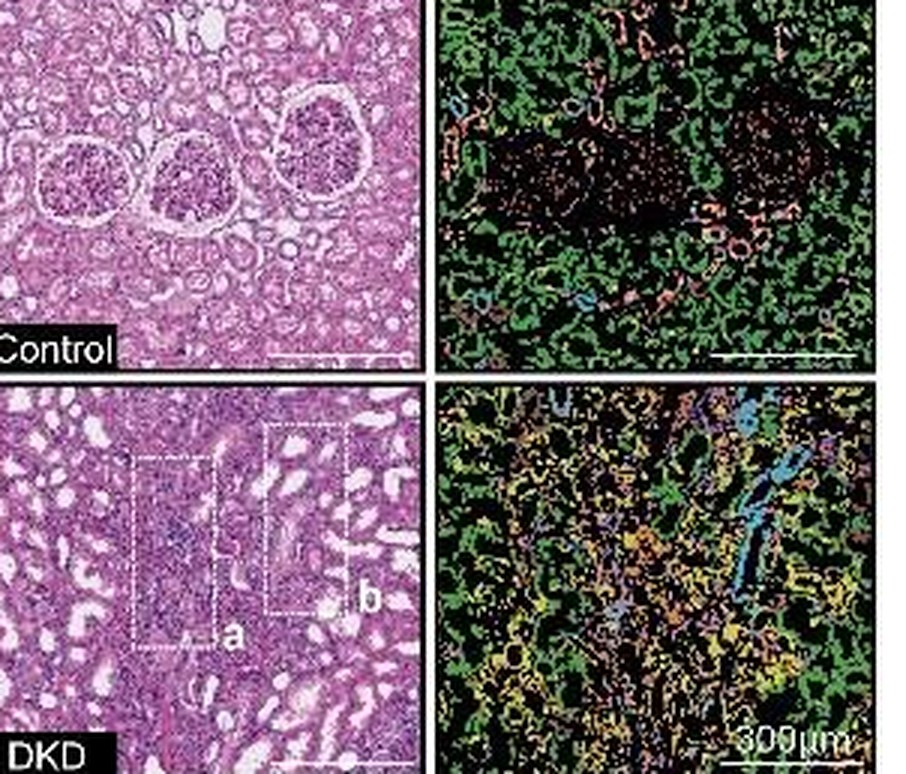
Histology (left) and spatial transcriptomics (right) of a control kidney and a diabetic kidney; cell types colored in the spatial map; tubulointerstitial inflammation and a collecting duct enlarged below. From the spatial atlas (Nature, 2026).
Albuminuria and eGFR are the entry criteria of nearly every kidney trial, yet standard therapy now lowers albuminuria in almost everyone, albuminuria reports the glomerular filter rather than the interstitium, and many progressors have normal albumin excretion. TRIDENT's biopsy-time plasma and urine, tied to the tissue and to outcomes, are the material for the next generation of markers.
A 14-protein plasma panel identifies the B cell-rich subgroup without a biopsy and was validated in 3,309 UK Biobank participants with diabetes (AUC 0.70 versus 0.63 for clinical variables).
The urinary complement proteome tracks diabetic kidney disease progression in TRIDENT (Nature Communications, 2025), and cells shed in urine, profiled one at a time, report the state of the tubule without a repeat biopsy.
KIM-1, TNFR1 and TNFR2 and the Olink plasma and urine proteomes measured in TRIDENT can now be compared directly with the molecular state of the same kidney, which is what validation against tissue means.
Blood and urine markers that reflect current tissue biology can be read in weeks, where an eGFR slope takes a year, and they can enrich a trial for the patients most likely to progress or to respond.
Chronic kidney disease has many causes: glomerulonephritis, hypertension and vascular disease, genetic diseases such as polycystic kidney disease, and the common end state of fibrosis that follows any sustained injury. Diabetes is the most frequent cause, and the diagnosis is usually made clinically, from diabetes plus albuminuria or reduced eGFR, without looking at the kidney. Biopsy series show that a meaningful fraction of such patients have a different or an additional disease.
Within biopsy-confirmed diabetic kidney disease, TRIDENT finds distinct biology: a podocytopathy-like class with glomerular epithelial hyperplasia, a B cell-rich immune subtype, and a continuous axis of tubular injury and fibrosis shared with other kidney diseases. Since 2025 the consortium enrolls non-diabetic comparators under the same protocol, so that the pathways specific to diabetes, and the pathways common to every failing kidney, can be separated and targeted on their own terms.
A prospective, multi-center cohort of adults with diabetes undergoing clinically indicated biopsy, followed longitudinally, so that kidney tissue pathology can be linked directly to kidney function trajectories and outcomes.
Germline genetics including whole-exome sequencing, epigenomic profiling and comprehensive molecular characterization of kidney tissue, complemented by bulk and single-cell transcriptomics, long-read sequencing, proteomics and metabolomics.
Single-cell and spatially resolved transcriptomics applied to human biopsies to define cell-type-specific and niche-specific injury programs, pathogenic cell states, intercellular interactions and the microenvironment that drives progression.
Pathology and multi-omic profiling combined in human tissue to identify core disease-driving pathways and to prioritize targets with direct relevance to human disease, informing mechanism-based therapeutic strategies.
Paired kidney tissue, blood and urine used to discover and validate biomarkers that reflect the underlying tissue biology, for diagnosis, prognosis, stratification and monitoring of therapeutic response without a biopsy.
A coordinated multi-institutional platform for biologically informed stratification, biomarker-driven trial design and efficient translation of discoveries into future clinical studies.
Aims: TRIDENT is a prospective, multi-center observational cohort study enrolling adults with diabetes who are undergoing a clinically indicated kidney biopsy as part of routine care. Kidney tissue obtained at biopsy, together with paired blood and urine samples, enables comprehensive molecular, genetic and biomarker analyses at scale. By integrating kidney histopathology with high-throughput genomic an…
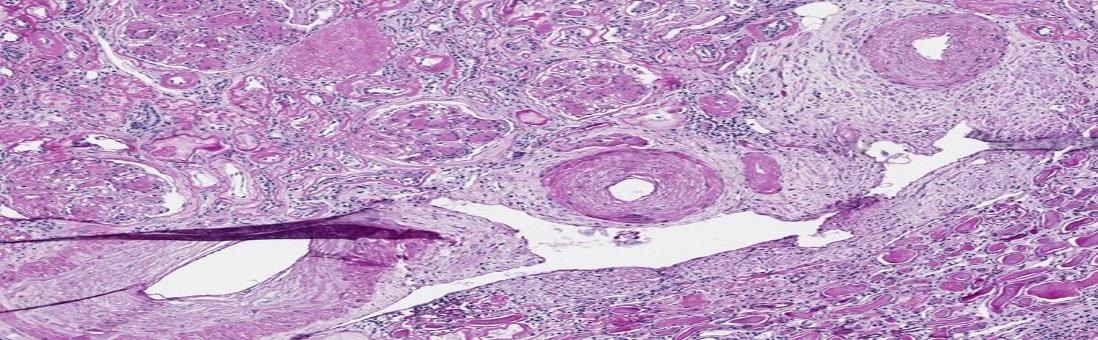
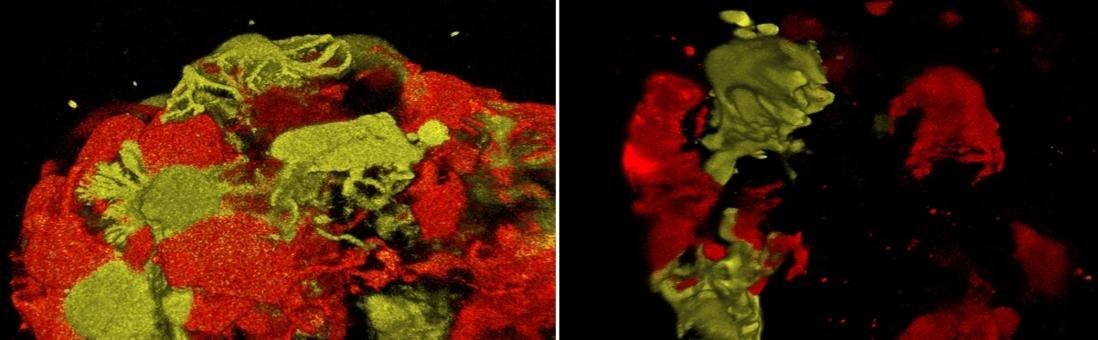
Genetics, histology and spatial biology are not separate projects in TRIDENT. They are layers of the same biopsy, read together and tied to the same outcome.